Home › Commercial Concrete Contractor Services
Keep your project on schedule with a reliable commercial concrete contractor in Chesapeake, VA. We handle flatwork, foundations, parking areas, and structural pours for offices, retail, and industrial sites. Our team coordinates with GCs and owners to deliver quality work that meets plans and specs.
Superior Concrete Chesapeake provides professional concrete contractor throughout Chesapeake, VA, Virginia and the surrounding area. Our licensed, insured crew delivers safe, clean, on-time work with a free estimate before anything begins. Call (757) 780-5778 or request your free quote.
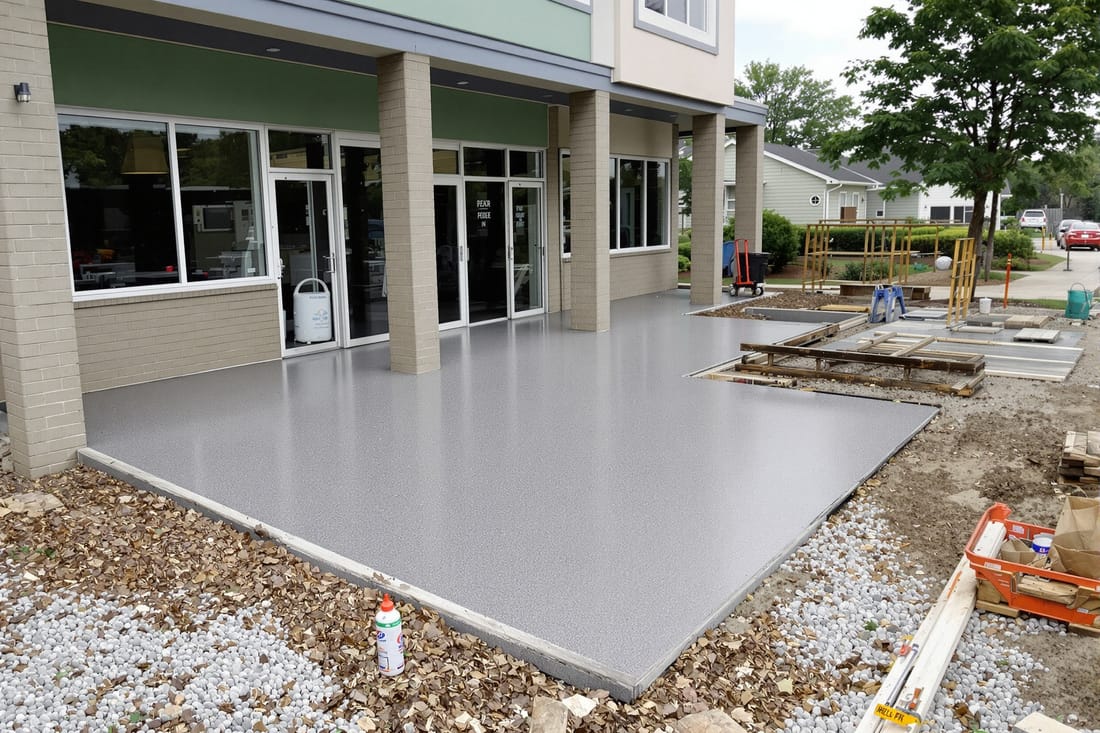
Commercial concrete solutions tailored to Chesapeake businesses
Superior Concrete Chesapeake provides commercial concrete contractor services built around how properties in Chesapeake, VA are actually used. From warehouse floors off Battlefield Boulevard to retail plazas near Greenbrier and multi-tenant offices along I-64, we design and install concrete that holds up to real traffic, weather, and code requirements.
Our process starts with a site meeting, not a guess from a photo. We walk the property, review your planned use (forklift lanes, customer parking, dumpster pads, delivery routes, storefront entries), and identify problem areas such as poor drainage, soft soils, or tight access. We then recommend concrete thickness, reinforcement type, and joint layout based on local soil conditions and expected loads, not a one-size-fits-all spec.
We regularly coordinate with local GCs, property managers, and facility owners on new construction, build-outs, and phased renovations. That includes planning pours around business hours, arranging safe pedestrian detours, and sequencing sections so you can keep parts of the site open. Our commercial focus means you get detailed schedules, clear communication, and work that fits within the broader construction plan rather than disrupting it.
What to expect from our commercial concrete installation process
Our commercial concrete work in Chesapeake follows a clear sequence so you know exactly what is happening on your site.
1) Site evaluation and layout: After utility locates are cleared, we mark grades, reference elevations, and exact boundaries for slabs, curbs, and pavements. We look at drainage patterns, existing structures, and traffic flow so water does not pond near doors or loading docks.
2) Excavation and subgrade prep: We remove unsuitable material, then compact the subgrade with plate compactors or rollers to reach proper density, which is critical in Tidewater soils that can be soft or silty. Where needed, we add and compact a stone base to improve bearing capacity and drainage.
3) Forms, reinforcement, and embeds: We set wood or steel forms to line and grade, install welded wire mesh or rebar (often #4 or #5 bars on a grid for heavy-use areas), and place dowels and anchor bolts where future steel, bollards, or equipment will attach. For interior slabs we coordinate floor drain locations and conduit stub-ups before we pour.
4) Concrete placement and finishing: We order commercial mixes from local batch plants that meet your specs for strength, slump, and air content. We place concrete with chutes, pumps, or buggies depending on access, then strike off, bull float, and machine trowel or broom-finish the surface based on use. For exterior sidewalks and parking, we typically use a broom or light broom finish for slip resistance.
5) Joints, curing, and protection: We cut control joints at the correct spacing and depth to manage cracking, install isolation joints at columns and walls, and apply curing compound or moisture-retention methods appropriate to the weather. Finally, we set barricades and signage so employees and the public do not damage fresh work before it reaches strength.
Commercial flatwork, parking lots, and loading areas
Commercial properties in Chesapeake put unique demands on concrete flatwork. Superior Concrete Chesapeake builds slabs that match those demands instead of just copying residential specs.
Parking lots and drive lanes: We design different concrete thicknesses for standard parking stalls, traffic lanes, and dumpster or delivery truck areas. Trash trucks and tractor-trailers near the back of shopping centers often require thicker concrete with heavier reinforcement to prevent rutting and corner breaks. We also consider snow plow paths and heavy turning movements that can stress the surface.
Loading docks and warehouse slabs: For loading docks along the Elizabeth River industrial areas or warehouse spaces off Military Highway, we look closely at forklift weights, racking layouts, and point loads from storage systems. This may mean thicker slabs, closer joint spacing, and doweled construction joints to limit differential movement. We can also provide floor flatness (FF) and floor levelness (FL) considerations when specified by the engineer.
Sidewalks and ADA access: We install sidewalks, curb ramps, and landings that are actually usable and code compliant, not just poured to look good on opening day. That includes slopes within ADA limits, proper detectable warning panels, and careful attention at door thresholds so tenants do not end up with trip hazards or water running under doors.
Repairs and phased replacements: For older shopping centers and office parks in Great Bridge, Deep Creek, and Western Branch, we often phase replacement of failing sections of concrete to keep businesses open. We sawcut and demo only targeted areas, pin new work into sound existing slabs where appropriate, and schedule pours to avoid peak customer hours.
Concrete mix, reinforcement, and finish options that affect performance and cost
Commercial concrete performance is heavily influenced by the mix, reinforcement, and finish choices. Our role as a concrete contractor is to explain these options in plain terms so you can make informed decisions.
Concrete mix: Most commercial work in Chesapeake uses 3,000 to 4,000 psi concrete, with higher strengths for specific structural elements or heavy-duty applications. We adjust slump for workability while staying within design limits, and we consider air entrainment for exterior slabs that see freeze-thaw cycles. In high-visibility areas we can discuss integral color or other aesthetic additives, but we will also explain how they impact cost and schedule.
Reinforcement: For light-duty applications, welded wire mesh may be sufficient. For drive lanes, dumpster pads, and loading areas, we often recommend rebar on chairs tied into a grid, or doweled joints that transfer load between panels. The type and spacing of reinforcement affects both performance and budget, so we walk you through where it makes sense to upgrade and where it is not necessary.
Finishes and treatments: You can choose from standard broom, troweled, or lightly textured finishes, and we offer non-slip aggregate finishes for areas where oils or water are common. For interior commercial spaces we can provide burnished troweled finishes suitable for sealed or polished concrete, depending on your flooring plans. We also apply penetrating or film-forming sealers for areas exposed to de-icing salts, frequent washing, or chemicals, and we explain the ongoing maintenance each sealer type requires.
What drives cost: Thickness, reinforcement amount, access limitations, night or weekend work, and the complexity of formwork are the main cost drivers. A simple rear service slab behind a small shop is very different from a multi-phase replacement of concrete around an active medical office, and we price accordingly so there are no surprises later.
Local site challenges in Chesapeake and how we handle them
Chesapeake has specific conditions that directly affect commercial concrete work, and ignoring them is often why pavements fail early. Superior Concrete Chesapeake builds each project with these realities in mind.
Soils and drainage: Much of Chesapeake sits on coastal plain soils that can be soft, with high groundwater in some areas. For commercial projects we pay close attention to proof rolling and compaction. Where we encounter pumping or unstable subgrade, we may undercut and replace with stone or use geotextile fabric to stabilize the base. We also adjust slopes and install proper drainage paths so stormwater moves to inlets or swales rather than sitting against building foundations.
Weather and curing: Summer heat and humidity, along with sudden storms, can ruin a slab if not managed. We schedule pours early in the day when possible, monitor weather, and use appropriate curing methods such as curing compounds or wet curing to reduce rapid moisture loss. On cool or damp days we plan for longer set times so finishing is done at the right moment, not rushed.
Tight sites and ongoing operations: Many commercial properties in Chesapeake have limited access, shared drive lanes, and continuous customer traffic. To work in these conditions we use smaller equipment where necessary, pump trucks when direct chute access is impossible, and set up clear barricades and signage. We also coordinate staging of concrete trucks to avoid clogging shared entrances or key intersections.
Existing utilities and structures: Older commercial strips and office parks often have shallow utilities close to where new concrete is needed. We rely on utility locates, careful sawcutting, and controlled excavation to protect those lines. When tying into existing slabs or structures, we drill and epoxy dowels, use proper expansion material, and match grades to avoid steps and trip hazards.
How to plan your commercial concrete project and work with our team
A successful commercial concrete project in Chesapeake starts with clear information and realistic planning. Superior Concrete Chesapeake helps you organize the details from the beginning so approvals and construction go smoothly.
Project scoping: When you contact us, we will ask for site plans or sketches, expected traffic loads (cars, delivery trucks, forklifts), any known soil issues, and whether the property is occupied during construction. If there are city requirements or engineering drawings already in place, we review those so our estimate reflects the actual scope.
Permits and inspections: For work that triggers city permits or requires inspections, we align our schedule with the City of Chesapeake process. While your design professional or GC typically handles formal submissions, we coordinate on inspection timing, site access for inspectors, and any field revisions related to the concrete scope.
Scheduling and phasing: For active retail, medical, and office locations, we often break the work into phases to maintain access. For example, we may replace half of a parking bay at a time, alternate entry paths, or pour at night so surfaces are ready by opening. Before we start, we give you a written sequence so tenants and customers know what to expect.
What to ask any commercial concrete contractor: Before you hire anyone, ask how they handle subgrade preparation in Chesapeake soils, what concrete mix and reinforcement they propose for your specific use, how they manage joints and curing, and how they will protect your business operations during construction. We are prepared to answer those questions in detail and to put the agreed approach in writing so you have a clear record of what is being built.