Home › Commercial Sidewalks and Curb
Provide safe pedestrian routes with commercial concrete sidewalks in Chesapeake, VA. We install city sidewalks, curb and gutter, and ADA compliant ramps around businesses and developments. Proper grades and finishes help with drainage and accessibility for all visitors.
Superior Concrete Chesapeake provides professional commercial concrete sidewalk throughout Chesapeake, VA, Virginia and the surrounding area. Our licensed, insured crew delivers safe, clean, on-time work with a free estimate before anything begins. Call (757) 780-5778 or request your free quote.
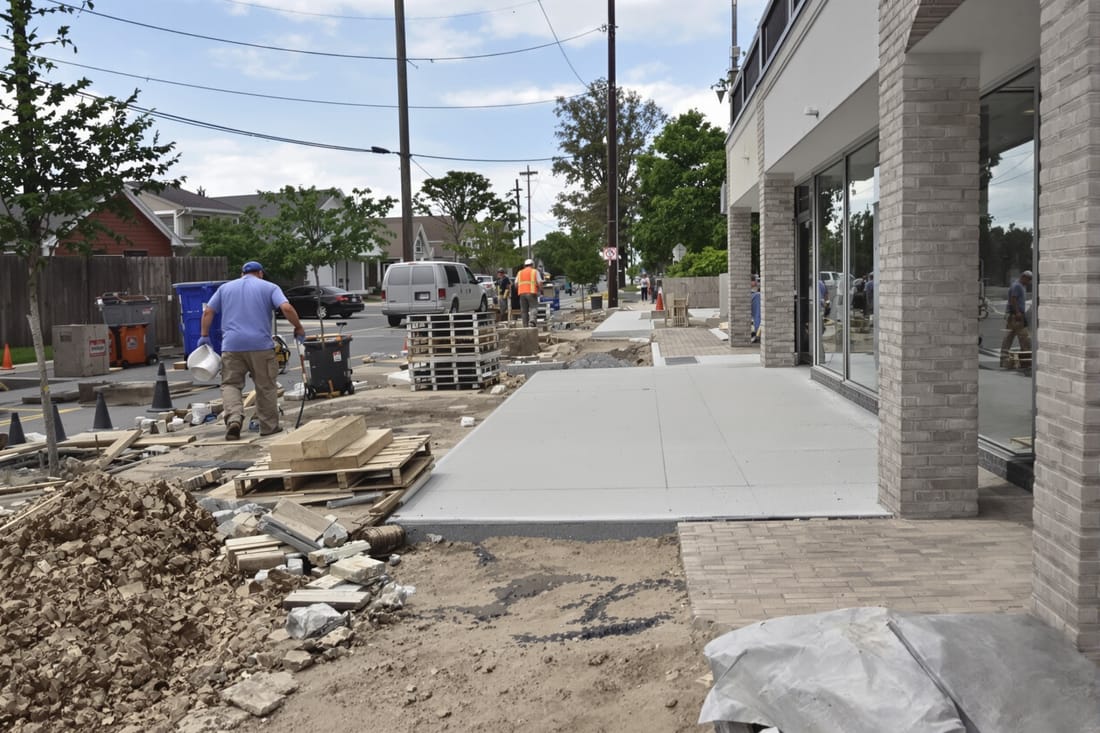
Commercial concrete sidewalks and curbs for Chesapeake properties
If you manage or own a commercial property in Chesapeake, you already know your sidewalks and curbs do more than frame the parking lot. They direct foot and vehicle traffic, handle stormwater, and have to meet accessibility rules. At Superior Concrete Chesapeake, we build commercial concrete sidewalks and curbs that look good, pass inspection, and hold up to years of carts, delivery trucks, and coastal Virginia weather.
We work with shopping centers, offices, churches, industrial sites, medical buildings, schools, restaurants, and HOAs across Chesapeake. Whether you need a new commercial concrete sidewalk for a ground‑up build or you are replacing cracked, uneven walks around an older property, we handle the whole process from layout and forming to final broom finish and cure.
Our team is local, so we know what the City of Chesapeake inspectors look for on commercial sidewalk and curb work, what tends to crack in our clay soils, and how to pitch everything so water actually flows to your inlets instead of across your storefront.
How the commercial sidewalk and curb process works
A solid commercial concrete sidewalk project in Chesapeake starts with planning. We begin with a site visit to measure, check slopes, and identify drainage paths. For new builds, we read your civil drawings and coordinate with your GC or site contractor. For replacement work, we look at why the existing walk or curb failed, whether it was tree roots, settlement, thin concrete, or poor base, so we do not repeat the same mistake.
Next comes layout and excavation. We cut and remove old concrete with saws and breakers, haul it off to a recycler, and strip soft or organic soil until we hit firm subgrade. On commercial sidewalks and curbs we typically install 4 to 6 inches of compacted stone base (21A or similar). In loading zones, dumpster approaches, and high traffic areas we may recommend thicker base and pavement. We compact with plate tampers or rollers to limit future settlement.
We set forms using straight lumber or metal forms and check slopes with levels and lasers. Most commercial concrete sidewalks need a cross slope of about 2 percent so water drains without creating a tripping feel. At entries we tie into finished floor elevations and make sure transitions are smooth for wheeled traffic.
Reinforcement is next. Many commercial sidewalks do fine with wire mesh or fiber reinforced concrete, but in drive approaches, dumpster pads, and curb returns that see truck traffic we often use rebar grids. Curbs are usually doweled into the pavement or thickened edge so they stay put when plows or delivery trucks bump them.
We pour using a 3,500 to 4,000 psi concrete mix suitable for our Chesapeake climate. Air entrainment helps with freeze‑thaw cycles, and we adjust slump so the mix is workable but not soupy. Our finishers strike off, bull float, edge, and broom finish the surface in a consistent direction to provide traction. We cut control joints at regular spacings, often 4 to 5 feet for sidewalks, to control crack locations.
Finally, we cure the concrete with curing compound or wet curing methods and set up barricades so no one walks or drives on it too early. In most Chesapeake weather, light foot traffic is OK after about 24 hours and vehicle traffic after several days, but we will give you specific guidance based on the mix and temperature.
Design and material options for commercial concrete sidewalks
A commercial concrete sidewalk does not have to be plain if your brand or tenants call for more curb appeal. Superior Concrete Chesapeake offers a few ways to upgrade without sacrificing durability.
Thickness and strength are the first design choices. Typical walkways get 4 inches of concrete, but busy retail plazas, grocery storefronts, and hospital drop‑off zones often benefit from 5 or 6 inches, especially where carts and occasional vehicles roll across the walk. If you expect regular truck overruns, we will recommend higher psi mixes and added reinforcement.
Finish is next. Most commercial properties in Chesapeake choose a standard broom finish for slip resistance when it is wet. We can control how coarse or fine the broom lines are, which matters near entry doors and on ramps. At decorative entrances or plazas, we can add a light exposed aggregate band, sawcut patterns, or colored concrete to break up large areas without creating maintenance headaches.
For curbs, you can choose standard vertical curb and gutter, roll‑over curbs for residential style drives, or mountable curb sections for service lanes. On existing parking lots, we match the existing curb profile so patchwork is not obvious.
Color and decorative options are available but we are honest about where they make sense. In heavy commercial traffic areas with a lot of deliveries, simple gray with clean lines often looks better in five years than a highly stamped pattern that gets chipped by carts and lifts.
Accessibility is always part of design. We plan sidewalk widths, slopes, and ramp locations to align with ADA standards and Chesapeake code, including detectable warning pavers at curb ramps where required. If we see a plan detail that will cause ponding or fail inspection, we flag it before we pour concrete.
Local codes, ADA compliance, and what affects cost in Chesapeake
Commercial concrete sidewalk work in Chesapeake must meet several layers of rules. City standards, Virginia Uniform Statewide Building Code, and ADA guidelines all matter, especially around accessible routes, curb ramps, and parking lots. At Superior Concrete Chesapeake we keep these in mind from the first layout so you are not re‑pouring sections after inspection.
For many commercial projects, your engineer or architect will already have plans that match City of Chesapeake details for curb and gutter, sidewalk width, and ramp design. We build to those details, but we also check real world slopes. If the grade on site is different from the plans, we may suggest adjustments so you still meet maximum slopes for ramps and cross slopes for sidewalks.
Permits and inspections vary depending on whether the work is inside your private lot or ties into the public right of way. If the new commercial concrete sidewalk connects to the city sidewalk network or affects drainage toward the street, the city typically wants to review and inspect. We can coordinate with your GC or engineer on this process so the timing fits your schedule.
Several factors drive cost on commercial sidewalks and curbs. Access is a big one. If we can get trucks and equipment close, costs stay down. If everything has to be wheeled in by buggy or pumped because of tight access or active business hours, labor goes up. Thickness and reinforcement also matter. A 6‑inch sidewalk with rebar and heavy base for truck traffic costs more than a 4‑inch walkway designed only for pedestrians.
Site conditions play a role. Soft or saturated soils, buried debris, or tree roots often require extra excavation and base material. Matching multiple existing elevations around storefronts and doors can add layout time. Night or off‑hours work to avoid disrupting busy shopping centers can also increase cost, although it often protects your business revenue and customer experience.
When we provide a quote, we break out key items, such as demolition, base prep, concrete thickness, reinforcement, and any decorative work, so you can see exactly where your money is going.
Common problems we solve and how to plan your project
Many Chesapeake property managers call us after sidewalks or curbs have already failed. We see the same problems again and again: trip hazards from slab settlement, puddles at entrances, crumbled curb faces along delivery routes, and ramps that never quite met ADA slope requirements.
Superior Concrete Chesapeake tackles these issues by starting with the cause, not just the symptom. If sidewalk panels have settled near a downspout, we look at redirecting runoff and improving base material. If curbs are breaking where trucks cut corners, we may recommend thicker curb sections, stronger mix, doweled connections, or small layout changes that keep vehicles off the weakest edge.
Tree roots are another Chesapeake reality. When roots have lifted a commercial concrete sidewalk, we coordinate with you and, where needed, your arborist or HOA to determine whether roots can be cut, barriers installed, or the walk can be redirected around the tree. We then rebuild the base and panels to reduce the chance of the same issue in a few years.
Scheduling is usually the biggest concern for active businesses. We can phase commercial concrete sidewalk work so only part of your entrance or parking lot is down at a time, with clear temporary pathways and signage. For high traffic locations, we often pour early in the morning so the concrete has time to set before your busiest hours.
Before you hire any contractor for commercial sidewalks and curbs in Chesapeake, ask how they handle layout, base prep, and curing, and whether they are familiar with local code details. Ask to see photos of similar projects and get clarity on how long areas must stay closed. We are happy to walk your property with you, discuss options, and build a realistic plan so your sidewalks and curbs work well for both your customers and your maintenance budget.