Home › Concrete Foundations and Footings
Build on a solid base with professional concrete foundations in Chesapeake, VA. We pour footings, stem walls, and slabs for new homes, additions, and detached structures. Proper excavation, reinforcement, and concrete placement help protect your investment from settling and structural issues.
Superior Concrete Chesapeake provides professional concrete foundations throughout Chesapeake, VA, Virginia and the surrounding area. Our licensed, insured crew delivers safe, clean, on-time work with a free estimate before anything begins. Call (757) 780-5778 or request your free quote.
Concrete foundations built for Chesapeake soil and weather
When you hire Superior Concrete Chesapeake for concrete foundations, you are not getting a one-size-fits-all slab. We start by looking closely at your specific lot in Chesapeake or nearby cities in Hampton Roads. That means checking soil type, drainage patterns, nearby trees, and how water moves across your property after a heavy summer storm. Tidewater clay soils can expand and contract more than people expect, so we plan footing depth, width, and reinforcement with that in mind.
For homes, garages, workshops, and small commercial buildings, the first step is layout. We pull accurate measurements from your plans, then stake out the foundation with strings and batter boards so you and your builder can see exactly where everything will sit. At this stage we also discuss finished floor elevation, so your slab is high enough to keep water away but not so high that steps and ramps become a problem.
Permits are usually required for structural foundations in Chesapeake, and we can coordinate with your builder or directly with the city to make sure everything we pour matches code. Codes specify minimum footing sizes, rebar, and anchor requirements. We usually go a bit heavier than the bare minimum in high stress locations, like under load bearing walls or around garage door openings, because the extra steel and concrete at this stage costs far less than repairs down the road.
Footings, excavation, and drainage that prevent future problems
Strong concrete foundations start with solid footings. Our crew excavates down to undisturbed soil or to the depth specified by the engineer. In Coastal Virginia, that usually means at least 12 inches below grade for frost protection, but the exact depth can vary depending on soil tests and building type. We cut clean, straight trenches for strip footings and dig larger pads under columns or point loads.
Before any concrete goes in the ground, we address water. Chesapeake has high water tables in many neighborhoods, and flat yards can hold water after storms. We look at whether you need a gravel base, perimeter drains, or simple grading changes so water does not sit against your foundation. In crawl space or basement situations, we often place perforated drain tile and a gravel layer at the footing level so groundwater has somewhere to go.
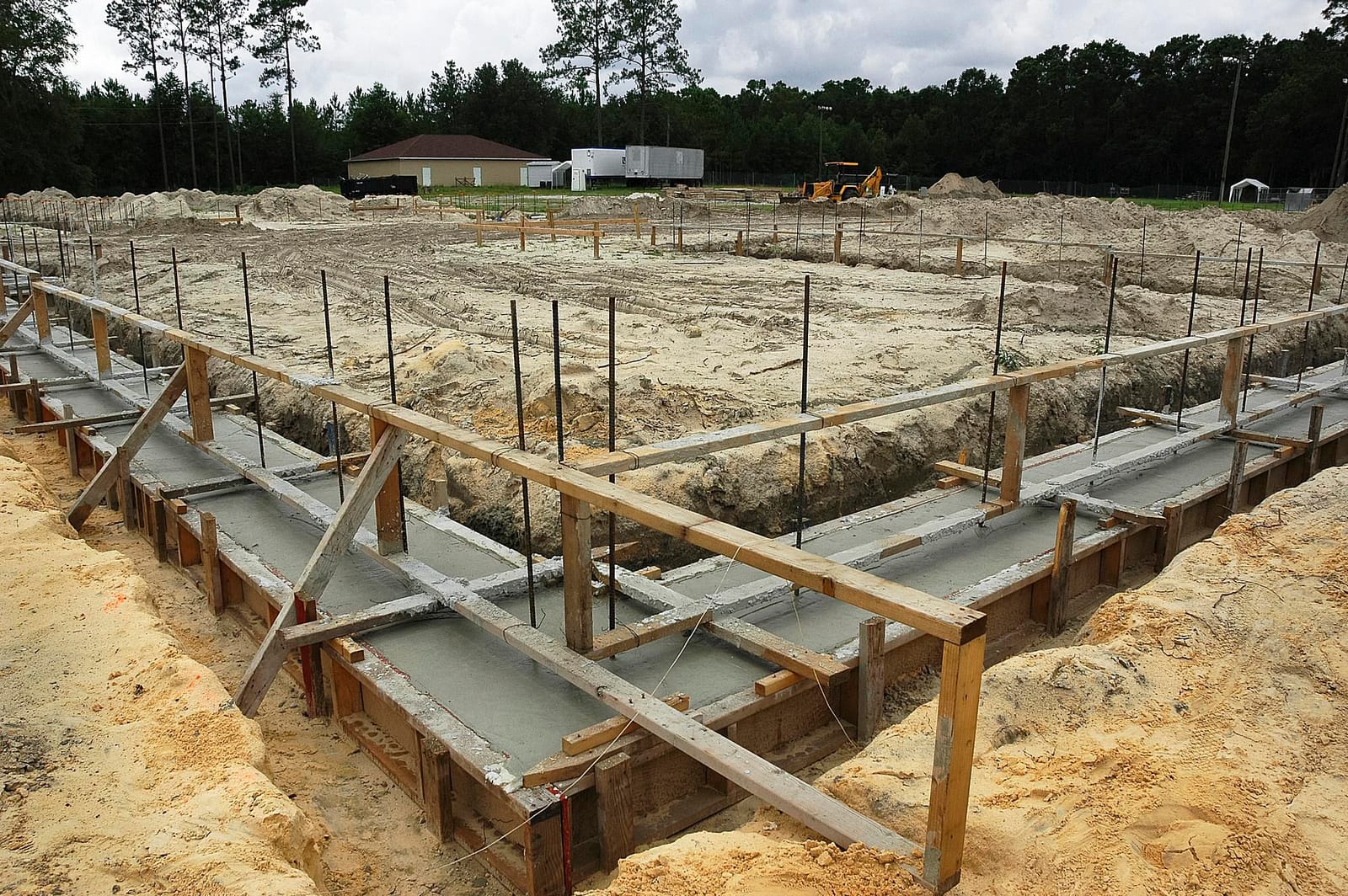
Formwork for footings is set to the proper width and elevation, then we install rebar cages or grids. The spacing and size of the steel depends on load, soil conditions, and footing layout. On tighter lots or around existing structures, we sometimes hand dig and use compact form systems to avoid damaging nearby utilities or landscaping. We schedule inspections at footing stage when required by the city or an engineer, so there is a record that the foundation started correctly before the concrete truck arrives.
How we pour, reinforce, and finish concrete foundations
With forms and steel in place, we schedule the concrete delivery for a time that fits both weather and site access. In Chesapeake, spring and fall are usually ideal because temperatures are moderate and there is less risk of extreme heat or hard freezes. We still pour in summer and winter, but may adjust mix design or use curing blankets and additives to protect the concrete.
We typically use a 3,000 to 4,000 psi concrete mix for residential foundations, and higher strengths when required by plans. On many projects we add fiber reinforcement to help control surface cracking. For larger slabs, we use a concrete pump to reach tight areas without driving trucks across your yard. While the concrete is being placed, our crew uses internal vibrators along the rebar and inside the forms to eliminate voids and honeycombing.
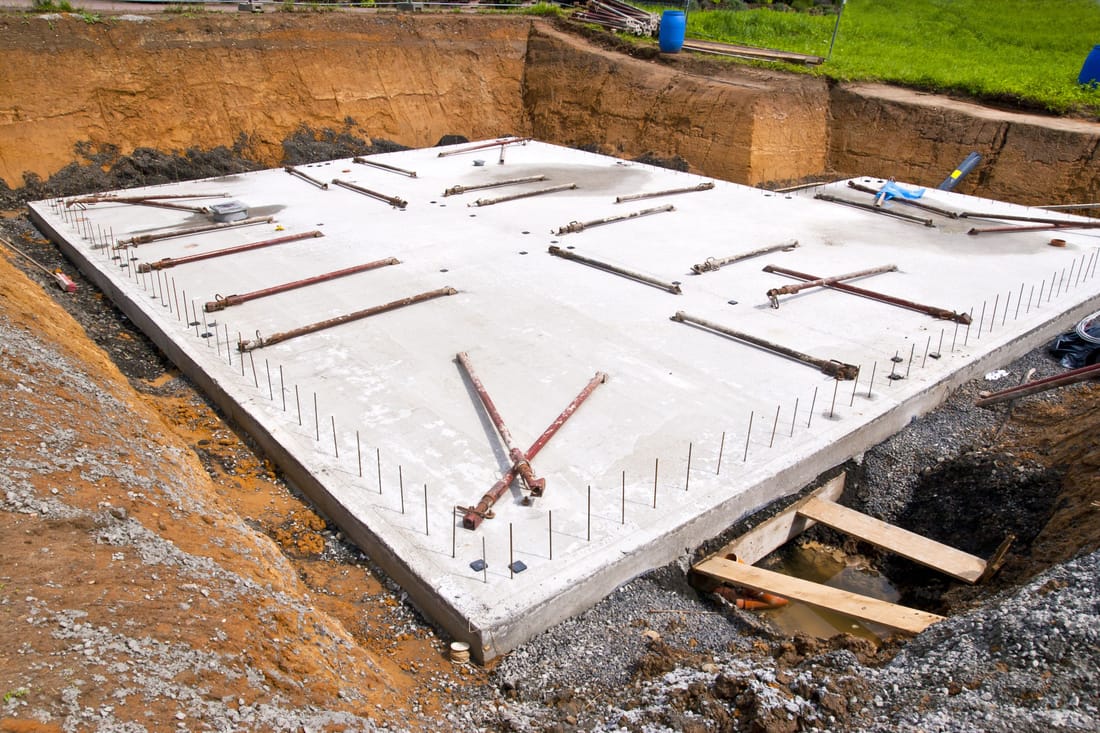
If your foundation includes a slab, we usually pour it after the footings have cured and stem walls or foundation walls are in place. We install a compacted stone base, vapor barrier, and reinforcing steel or wire mesh. Control joints are laid out so that any minor cracking happens under those cuts instead of randomly across the floor. For garage floors and workshops, we often recommend thickened edge slabs at the doors and in heavy load areas where vehicles or machinery will sit.
Anchor bolts, hold-downs, and embedded hardware are set while the concrete is still plastic, using layout lines and templates from the framing plans. This step is critical, because it ties the structure to the foundation and affects how your home or building handles strong coastal winds. Once finishing is complete, we cure the concrete properly, often with curing compound or wet curing methods, so it reaches its designed strength and stays more resistant to surface wear and cracking.
Cost factors and options for concrete foundations in Chesapeake
Many homeowners ask what drives the cost of concrete foundations. At Superior Concrete Chesapeake, we price foundations based on more than just square footage. Soil conditions are a major factor. Soft or saturated soils can require deeper footings, more stone base, or even engineered solutions like wider spread footings or grade beams. Access to the site is another driver. Tight backyards that require wheelbarrow work or pumping will cost more than open lots where trucks can back right up.
Thickness and reinforcement levels also affect price. A basic 4 inch slab with standard reinforcement costs less than a thicker slab with rebar grid and heavy load capacity. If you are planning to park heavy trucks, boats, or RVs on the slab, it usually makes sense to invest in extra thickness and steel. Features like vapor barriers, insulation under the slab, or integrated thickened footings will add some cost, but they also add comfort and durability, especially for conditioned living spaces.
Water and drainage solutions are a separate but related cost. On low lying Chesapeake lots or near marshy areas, we might recommend additional gravel, French drains, or sump systems around foundations. Spending a bit more on drainage at the start helps prevent slab heave, damp crawl spaces, and mold issues later.
We provide written estimates that break out major components, such as excavation, footings, slab, rebar, pump truck, and any special engineering. That way you can see where your money is going and which options are worth upgrading for your specific project.
What Chesapeake property owners should know before hiring a foundation contractor
Before you choose someone to install concrete foundations, it helps to know what to ask. Start with experience in this specific region. Superior Concrete Chesapeake works regularly in Chesapeake, Virginia Beach, Norfolk, and the surrounding Tidewater area, so we understand local clay behavior, typical water table issues, and city inspection requirements. Ask any contractor how they plan to handle drainage around your foundation and what they do differently on high water table sites.
You should also ask about reinforcement details, not just the concrete thickness. A good contractor should be able to explain where rebar will go, what size, and how it will be tied and supported so it stays in place during the pour. They should also be clear about control joint layout and curing methods. If you get vague answers like "standard practice" without specifics, that is a red flag.
Timing is another point to consider. In Chesapeake, heavy spring rains and hurricane season in late summer and early fall can slow work. We help you plan around wetter months when possible, or build in extra drainage and protection measures if a schedule cannot move. For new home builds, we coordinate with your builder so that framers, plumbers, and electricians know when they can safely start work on top of the foundation.
Finally, make sure you receive drawings or at least clear sketches of your footing layout, slab thicknesses, and any thickened areas before work begins. This helps avoid surprises and makes sure everyone is working from the same plan. When we take on a job, our goal is simple: a strong, level, dry foundation that makes the rest of the build go smoothly and does not create headaches 5 or 10 years down the road.