Home › Concrete Slab Installation
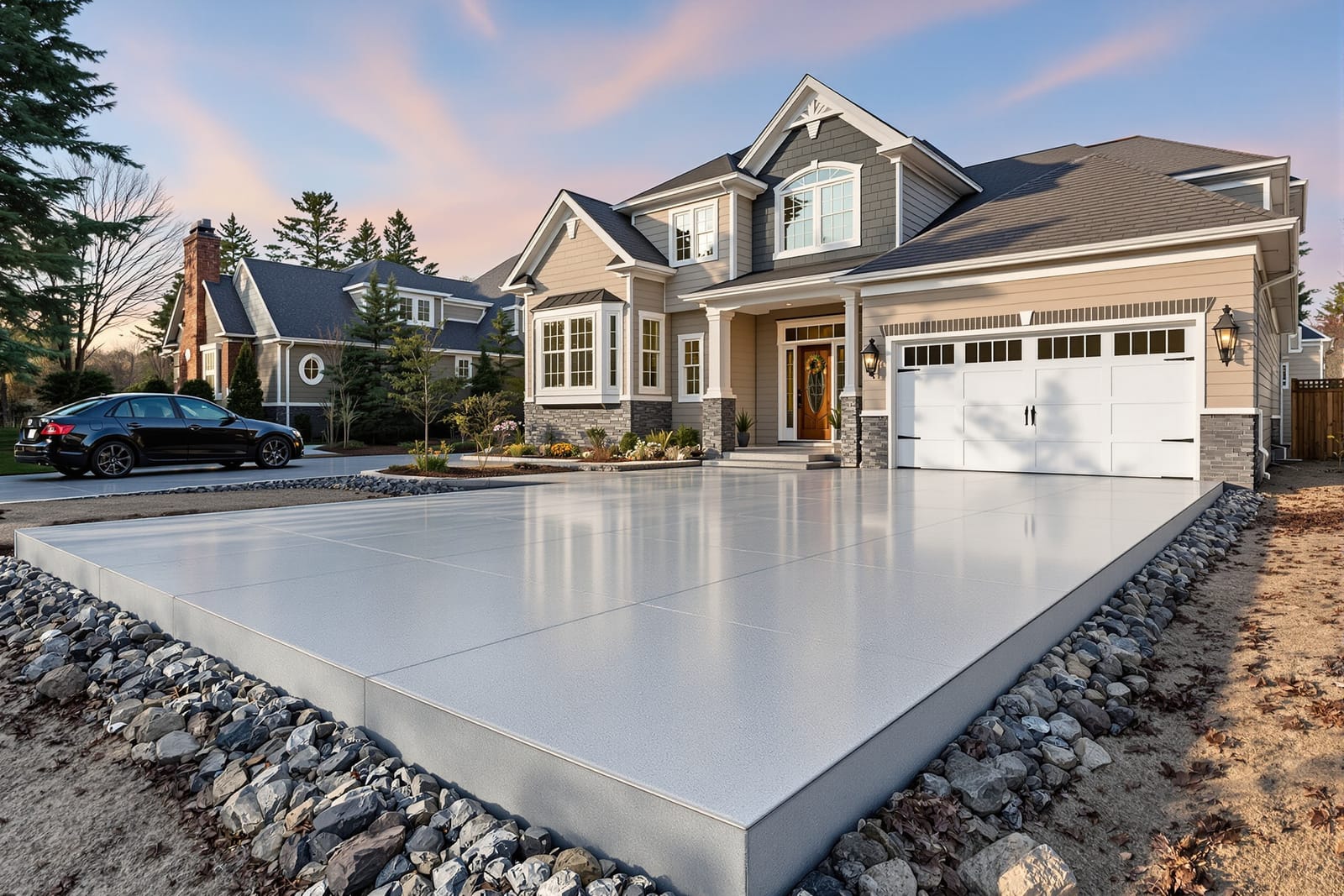
Get a level, long lasting concrete slab in Chesapeake, VA for sheds, garages, additions, and outdoor living areas. We handle site prep, grading, forms, and reinforcement to meet your load needs. A properly installed concrete floor slab helps prevent cracking, settling, and moisture problems over time.
Superior Concrete Chesapeake provides professional concrete slab throughout Chesapeake, VA, Virginia and the surrounding area. Our licensed, insured crew delivers safe, clean, on-time work with a free estimate before anything begins. Call (757) 780-5778 or request your free quote.
Concrete Slab Installation in Chesapeake, Built for Tidewater Conditions
At Superior Concrete Chesapeake, we install concrete slabs that are designed for the specific soil, drainage, and weather conditions of Chesapeake and the surrounding Tidewater area. A slab in Deep Creek or Great Bridge faces different groundwater levels and clay content than a slab in Western Branch or Greenbrier, so we adjust how deep we dig, how much stone base we use, and what concrete mix we pour.
We install concrete slabs for patios, sheds, garages, workshops, room additions, generator pads, pool equipment, and small commercial uses. Before we quote anything, we visit your property, check access for trucks, locate utilities, and look at how water currently moves across your yard. This site visit lets us recommend a slab thickness, reinforcement type, and control joint layout that matches how you plan to use the slab and how your ground actually behaves after a heavy coastal rain.
How We Prepare Your Site for a Durable Concrete Slab
Local slabs fail more from bad prep than bad concrete. Our crews start by calling Miss Utility of Virginia to mark underground gas, electric, and communication lines. In many Chesapeake neighborhoods, older lines are shallow or not exactly where old records say they are, so we never skip this step.
We strip sod, roots, and soft topsoil until we reach firm subgrade, then we compact it with plate tampers or a roller. In clay-heavy pockets of Chesapeake, such as parts of Hickory and Bells Mill, we often add several inches of compacted granular fill so the slab is not sitting directly on expansive clay. This reduces the seasonal heaving that can crack thinner slabs.
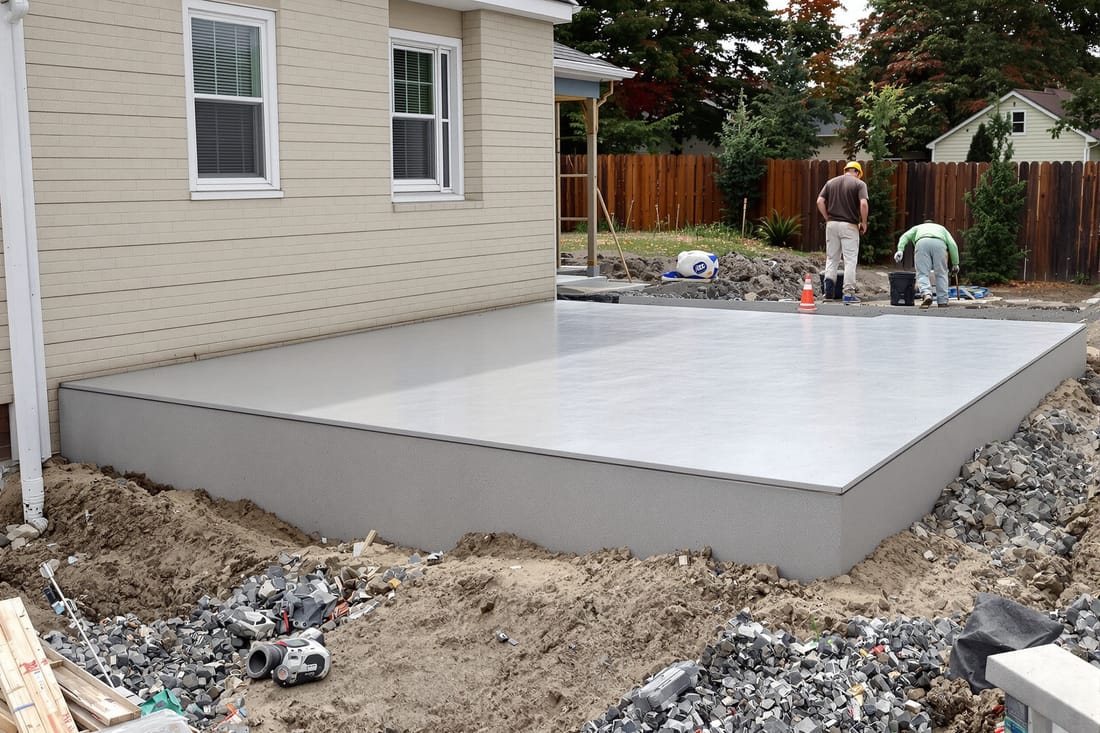
Next we install a base layer of crushed stone, usually 4 to 6 inches of 57 or 21A stone depending on the load and drainage needs. The stone is graded so water can move away from the slab and not sit underneath it. If the slab is next to your home, we pitch the base slightly away from the foundation to avoid directing water toward your crawlspace. Only after the base is compacted to a firm, level surface do we set wood or metal forms to define the slab shape and height.
Reinforcement, Thickness, and Mix Options for Your Concrete Slab
Not every slab in Chesapeake needs to be built like a truck dock, but it does need enough strength and reinforcement for its actual use. For a typical patio or shed floor, we usually recommend a 4 inch thick slab with either welded wire mesh or fiber reinforced concrete. For garage slabs, RV parking pads, and heavier loads, we often increase the thickness to 5 or 6 inches and add #3 or #4 rebar on a grid pattern.
We typically pour a 3,500 to 4,000 psi concrete mix with air entrainment, which holds up better through winter freeze and thaw cycles, even though Chesapeake winters are relatively mild. If your slab will support heavy point loads, such as a two post vehicle lift or safe, we can upgrade to higher strength mixes and adjust the rebar layout to spread the load.
For interior or climate controlled spaces, we may place a poly vapor barrier under the slab to limit moisture migration. For outdoor slabs, especially in low lying areas of Chesapeake where the water table is high, we focus more on drainage and base preparation than on a plastic barrier, since trapping water under the slab can sometimes cause other issues if not planned correctly.
Pouring, Finishing, and Control Joints Done the Right Way
On pour day, Superior Concrete Chesapeake coordinates the concrete truck arrival to match our crew size and the slab size. We place the concrete quickly so it does not start to set in the truck, then we screed it to the correct elevation using straightedges or a vibratory screed for larger areas. We bull float the surface to push aggregate down slightly and bring paste to the top for finishing.
One mistake we see on many local slabs is finishing too early and skipping proper joints. We allow the bleed water to evaporate before we trowel or broom, which reduces surface dusting and scaling. For most outdoor slabs, we use a light broom finish that provides traction when wet, helpful in Chesapeake's humid climate.
We install control joints at calculated intervals, usually every 8 to 12 feet depending on thickness and layout, to encourage the slab to crack in straight lines below the joint instead of random fractures. In some cases we tool joints while the concrete is still plastic, and on other jobs we return with a saw once the slab has gained initial strength. Around posts, plumbing penetrations, and corners near doorways, we adjust our joint layout to target the natural weak points where cracks like to start.
Local Codes, Permits, and HOA Considerations in Chesapeake
Concrete slab requirements in Chesapeake vary depending on what the slab supports. For most accessory structures over a certain size, such as detached garages or workshops, the city may require permits, inspections, and in some cases slab design details as part of the building permit. For simple patios or small shed slabs, formal permits are not always required, but zoning and setback rules still apply.
Superior Concrete Chesapeake helps you understand which category your project falls into. If your slab is for a new structure that needs a building permit, we coordinate with your builder or designer so the slab thickness, reinforcement, and anchor bolts meet the city's structural expectations. In flood prone or drainage restricted areas, such as near canals and marshes, we may recommend elevating the slab or adjusting grades so you do not create runoff issues for yourself or your neighbors.
If you live in an HOA community, we are used to working with approval boards in neighborhoods like Great Bridge, Grassfield, and Western Branch. We can provide drawings, finish samples, and detailed descriptions so your concrete slab project is more likely to be approved the first time instead of going back and forth for months.
What Affects the Cost of a Concrete Slab in Chesapeake
Concrete slab pricing is driven by more than just the square footage. The biggest cost factors are site access, base preparation, slab thickness, reinforcement type, and any decorative options. If the concrete truck can back right up to the forms, your cost is lower than if we have to wheelbarrow or pump concrete from the street because of fences, tight side yards, or soft ground.
Soil corrections also matter. In parts of Chesapeake with poor drainage or deep organic material, we may need to remove more soil and bring in additional stone. That extra excavation and haul off changes the price but is usually cheaper than repairing a failed slab a few years later.
Upgrades like thicker sections, rebar instead of wire mesh, broom and border finishes, or integral color increase cost slightly but can be worth it for heavy use areas or outdoor living spaces. Our estimates from Superior Concrete Chesapeake break these items out so you can see where your money is going. We also note any optional steps, such as adding a thickened edge where you might later build a wall, so you can plan ahead instead of paying for major changes later.
Common Slab Problems We Help Chesapeake Homeowners Avoid
We are often called to look at cracked, settled, or spalling slabs that another contractor installed. The most common issues we see around Chesapeake are inadequate base compaction, no control joints, using the wrong finish method in humid weather, and poor drainage planning.
To avoid settlement, we compact both the subgrade and the stone base in thin lifts and avoid pouring over soft fill. If we discover buried debris, roots, or old stumps during excavation, we remove them and replace them with compacted stone so they do not rot away and create voids under your slab.
To reduce surface scaling and flaking, we do not add water to the surface while finishing, and we avoid steel troweling exterior slabs that will see freeze and thaw cycles. When cracks do occur, which can still happen even with correct procedures, we design the joint layout and reinforcement so those cracks stay tight and follow planned lines.
From the first site visit to final cleanup, Superior Concrete Chesapeake focuses on building a slab that fits how you live and how Chesapeake's ground behaves. Our goal is for you to use your new concrete slab for decades without having to think about what is under your feet.