Home › Concrete Steps and Stoops
Improve safety and curb appeal with new concrete steps in Chesapeake, VA. We build front stoops, porch steps, and side entry stairs with proper riser heights and treads. Durable concrete steps resist shifting and crumbling when set on a solid base and reinforced correctly.
Superior Concrete Chesapeake provides professional concrete steps throughout Chesapeake, VA, Virginia and the surrounding area. Our licensed, insured crew delivers safe, clean, on-time work with a free estimate before anything begins. Call (757) 780-5778 or request your free quote.
Concrete Steps and Stoops Built for Chesapeake Homes
Concrete steps are not just a path to your front door. In Chesapeake, they also deal with heavy rain, humidity, and occasional freezing nights. Superior Concrete Chesapeake installs concrete steps and stoops that match your home, meet code, and hold up to local weather.
We start with a site visit at your Chesapeake property. We measure the rise from grade to your entry, check existing porches or walkways, look for drainage issues, and note where water currently flows. This lets us design steps that are safe to walk on in wet weather and do not pool water at the base.
Every set of concrete steps we build is laid out to match your specific entry. We confirm tread depth, riser height, and landing size to satisfy local building code and to feel natural to walk up and down. If you have older brick or block steps, we evaluate whether they should be fully removed or can be used as a structural base after repairs.
How We Build Long-Lasting Concrete Steps and Stoops
Our crew begins by removing old steps or stoops if needed. We break them out in sections, load debris directly into a trailer, and haul it off the same day so you are not left with a mess in the yard. If there are existing handrails, we either remove and reset them or plan for new posts to be mounted after the pour.
We then excavate and prepare the base. For most Chesapeake homes, we dig down 6 to 8 inches below finished grade for the step footprint. We compact the soil and add a layer of crushed stone or gravel to reduce settling and improve drainage. This step is important in our region where heavy rains can quickly soften unprepared soil.
Next we set concrete forms that define each step and the stoop. We use straight lumber or metal forms, secure them with stakes, and check all riser heights and tread depths with a level and tape measure. At this stage, you can still request small adjustments in shape or size before concrete arrives.
We install steel reinforcement where it is needed. Typical residential steps get rebar grid or wire mesh in the stoop slab and key locations in the steps. On wider or taller step runs, we tie in additional rebar to help resist cracking and shifting over time.
Once everything is formed and reinforced, we order a ready mix concrete suitable for exterior steps. We usually use a 3,500 to 4,000 psi mix with air entrainment, which handles Chesapeake's occasional freeze-thaw cycles better than a basic mix.
Finish Options, Colors, and Practical Design Choices
The finish you choose for your concrete steps affects both appearance and safety. Superior Concrete Chesapeake typically recommends a light broom finish on the treads, which provides traction when it rains and stays safer than a smooth surface. The risers and sides can be broomed, troweled smooth, or given a light texture, depending on your preference.
We can add integral color to the mix or apply colored hardeners during finishing. This works well when you want steps that coordinate with brick, siding, or existing concrete. In Chesapeake neighborhoods with HOA guidelines, we often match existing porch slabs or walkways so the steps look like they have always belonged.
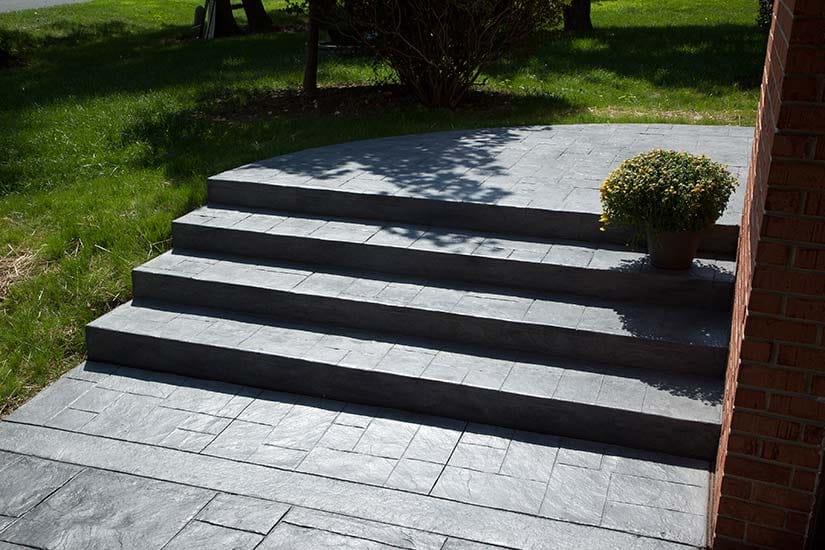
If you want a more decorative look, we can form curves at the outer edge of the stoop, add bullnose front edges, or integrate a small seating ledge. Decorative borders, simple scoring patterns, or a contrasting band at the edge of each tread can make the steps easier to see at night and improve curb appeal without driving the price into stamped-concrete territory.
For homes where shoes track a lot of sand or debris, we may widen the landing or add a small side pad so there is room for a mat or bench. These small design choices make daily use more convenient and cost very little extra when planned in advance.
What Drives the Cost of Concrete Steps in Chesapeake
We price concrete steps and stoops based on a few clear factors, not vague estimates. The main drivers are size, height, access, and finish. Taller entryways need more steps and more concrete. Wider stoops or curved layouts use more formwork and labor. Limited access, such as tight side yards or backyard entries that require wheelbarrow transport instead of a chute, also adds time.
Removal of existing structures is another cost factor. Old brick, stone, or concrete that is thick and reinforced can take longer to demolish and load out. If there are utilities like gas lines, sprinkler lines, or buried electrical near the area, we have to hand dig and work more carefully, which we factor into the quote.
Finish options and features affect cost as well. A straightforward broom-finished set of steps will be more economical than multi-color decorative finishes or complex shapes. Handrail coordination is usually priced separately, since some homeowners already have a metal fabricator or specific rail style in mind.
Superior Concrete Chesapeake provides itemized estimates so you can see where your money is going: demolition, base prep, forming, reinforcement, concrete, finishing, and sealing if requested. This transparency helps you adjust the design if you want to manage cost without sacrificing safety or durability.
Timing, Weather, and Local Conditions in Chesapeake
In Chesapeake, the best time to install concrete steps is typically from early spring through late fall, when temperatures stay above freezing at night. Concrete can be poured in cooler weather, but extended cold snaps require extra protection like insulated blankets and accelerators, which can add to cost.
Summer pours work well, but our crew plans around heat and sun. We may schedule earlier in the day, set windbreaks, or use evaporation control products so the surface does not dry out too quickly in hot, breezy conditions. This helps reduce surface cracking and ensures a stronger finish.
Rain is a regular reality here, so we monitor forecasts closely. If heavy rain is likely at the time of pour or within the first few hours of curing, we will reschedule instead of risking washouts or pitted surfaces. Light showers later in the cure are usually manageable, and we protect fresh work with plastic and proper drainage as needed.
Soil conditions also matter. Many Chesapeake yards have a mix of clay and sandy areas. Clay holds water and can move more, while sandy pockets can shift if not compacted. During your consultation, we check how the soil behaves near your entry and adjust base depth or reinforcement to account for it.
Common Problems, Repairs, and How We Prevent Them
Cracking, settling, and water pooling are the three issues we see most often with older concrete steps in Chesapeake. Fine hairline cracks are normal in almost any concrete, but wide, uneven cracks or dropped corners usually point to poor base preparation or lack of reinforcement. When we build new steps, we compact the base thoroughly, use gravel, and place control joints or rebar to manage where minor cracks occur.
Settling happens when steps are placed directly on loose soil or on organic material that decays over time. We avoid this by excavating to solid ground, removing roots and soft spots, and building up a compacted stone base. For homes with existing settling steps, we assess whether mudjacking or polyurethane lifting is practical, or if complete replacement is the safer long-term fix.
Water problems show up as ice at the bottom of steps in winter or as green algae on shaded treads. To prevent this, we pitch the treads slightly so water runs off and position the bottom step and landing so they drain away from the house. In some cases, we add a small channel or regrade the surrounding soil to keep water from sitting at the base.
Superior Concrete Chesapeake also talks through simple maintenance with you before we leave. We explain when to seal the new steps, what kind of de-icer is safe for Chesapeake winters, and how to spot early signs of movement around the edges. The goal is simple: steps and stoops that stay solid under your feet for many years, with no surprises.